A Free Budgeting App Is Paid For by the Products It Recommends
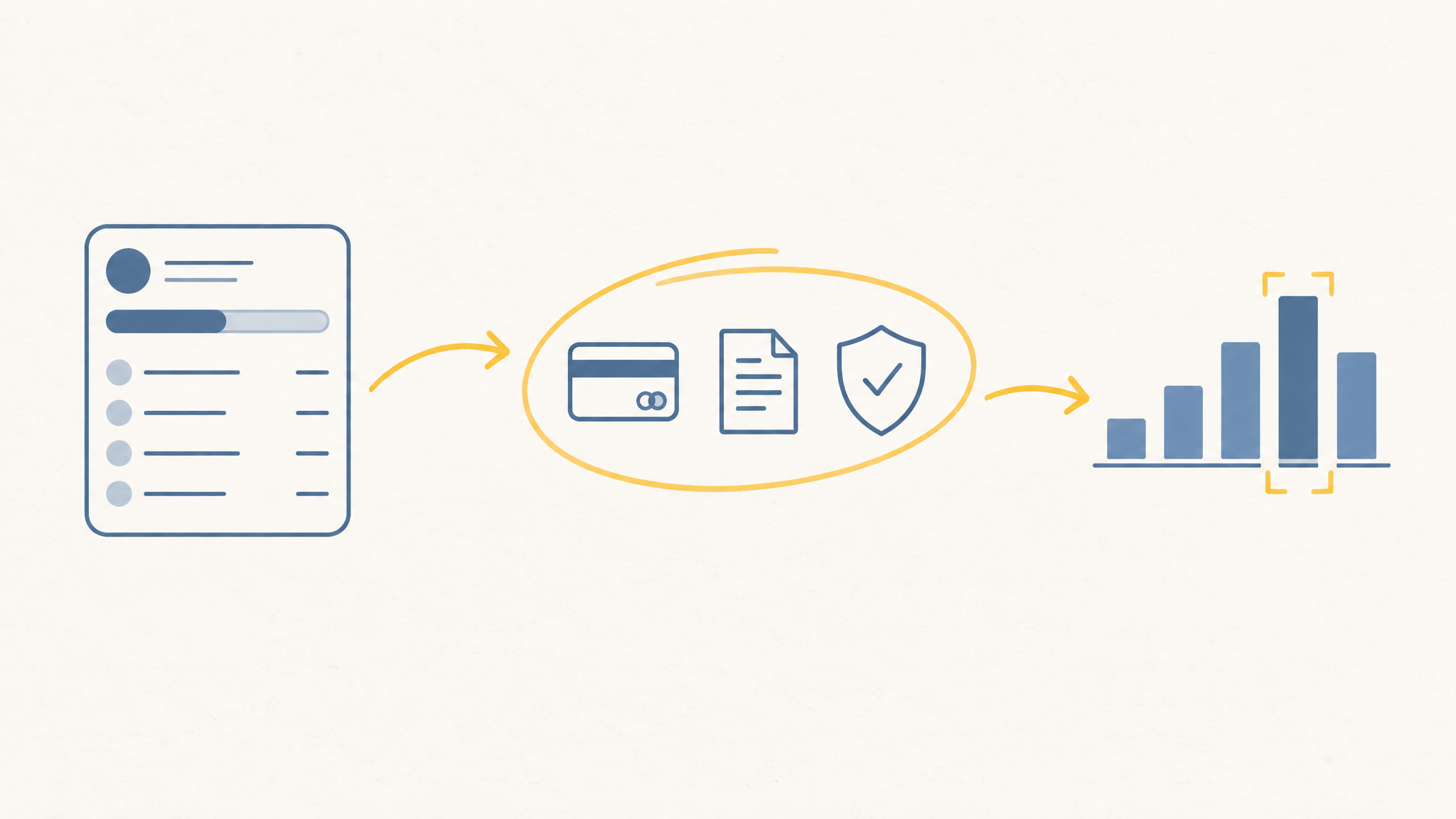
A budgeting app that costs nothing still has to be paid for, and the thing that pays for it is the recommendation sitting under your balance: a credit card, a personal loan, an insurance policy. The app can only make that recommendation if it can see enough of your money to know what to offer, which is why the permission screen asks for so much.
CalmExpense takes the other route. It costs $29.90 once, it recommends nothing, it never asks for a bank login, and the ledger it builds is a Google Sheet in your own Drive. The trial runs 14 days with no card, signup is Gmail only, and Google will show an unverified-app warning because the developer is one person rather than a company with a compliance team.
The recommendation is the revenue
A card referral pays a platform when an application is approved. A loan lead pays more. An insurance cross-sell pays again, and a wealth product pays the most of all. Investopedia's breakdown of how Mint made money described this structure years before Mint closed: the free budgeting tool was the front door, and the financial products behind it were the business.
There is nothing hidden about the arithmetic. It just means you are not the customer of a free app. Your transaction history is what makes the recommendation worth paying for, and the more complete that history is, the more it is worth.
Why a free app wants every account
An app that sees one bank account can suggest a card. An app that sees every account, every balance and every merchant can tell a lender what your income looks like, how you repay, and when you are likely to need credit. That is the difference between a small referral fee and a large one.
Most bank-linked apps reach that data through an aggregator: Plaid, MX, Yodlee or Finicity. The aggregator sits between your bank and the app, and it holds its own copy of the connection. Plaid settled a class action in 2021 over how its Link screen collected bank credentials and how much data it retained, and the settlement site still explains the terms. The EFF's coverage of Visa's attempted acquisition of Plaid in 2020 made the same point from the other side: the transaction data was the asset being bought.
The permission list on any of those apps is worth reading once, and what a budgeting app can see in your Google account is the longer version of that check. CalmExpense has no aggregator in the path. There is no Plaid connection, no stored bank credential, and no server holding a copy of the ledger. A CSV file goes in through the browser, the rows land in a Google Sheet you own, and the developer never sees the result.
Four ways the bill arrives
| Model | Upfront cost | How it earns | What it can see |
|---|---|---|---|
| Free bank app | $0 | Insurance, loans and funds sold inside the app | Accounts held at that one bank |
| Free aggregator app | $0 | Card referrals, loan leads, aggregated data | Every linked account and merchant |
| Subscription app | $99 to $109 a year | The fee, plus partner and analytics arrangements | Every linked account, usually via Plaid |
| One-time purchase | $29.90 once | The purchase | The CSV files you import |
The table is the whole argument. Two rows are free and both are paid for by something other than you. One row charges you every year and still keeps the partner arrangements. The last row has one revenue line and it is the price on the page.
A subscription does not buy privacy
YNAB costs $109 a year, Monarch's Core plan is $99.99, and Tiller is $99. All three connect through aggregators, and all three carry privacy policies that allow de-identified data to be shared with partners. Paying a fee and handing over the transaction stream is the worst of both arrangements, because the fee buys features rather than insulation.
That is the part most comparisons skip. The question is whether the company selling you the software also earns from what the software learns about you.
What $29.90 removes
The price is one line because there is only one thing being sold. With no affiliate deal and no partner arrangement, there is nothing to steer you toward, so the dashboard has no reason to promote a card you do not need.
The mechanics follow from that. De-duplication stops the same purchase being counted twice when two exports overlap. Merchant cleanup turns an unreadable descriptor into a name you recognise. Keyword rules tag a row the moment it is imported, so the categorising happens once instead of every month. The whole routine takes about 15 minutes a month, and the Google Sheets file underneath is an ordinary spreadsheet that opens in Excel, exports to CSV, or comes out with Google Takeout.
The limits, stated plainly
There is no mobile app. CalmExpense runs in a browser, on top of Google Sheets, and that is the only place it runs. Import is manual: a CSV from your bank, dropped in, rather than a live feed. Google shows its unverified-app warning to new users while the app is under 100 users, which is a real friction point at the exact moment trust matters. Support is one person doing his best, with no service-level agreement behind it, and the four things CalmExpense will not do covers the rest of the list.
Those are the costs of the model. A linked app avoids every one of them, and it charges for that convenience in a currency that is not dollars.
When a linked app is the better buy
If the goal is to never touch a file, a bank-linked app does something CalmExpense cannot: it fetches the transactions without you. For someone who would otherwise track nothing, $109 a year for automatic sync is a reasonable trade, and pretending otherwise would be dishonest.
The trade only works in one direction, though. Once the ledger is in a file you own, it survives a price rise, a shutdown, an acquisition and a change of heart. Five years of a subscription buys access. Five years of a spreadsheet buys an archive, which is the arithmetic behind the $545 five-year cost of a $109 app.
FAQ
Do free budgeting apps sell my data?
Most say they do not sell identifiable records, and that statement can be true while de-identified patterns, analytics pixels and partner arrangements still exist. The visible part of the model is the recommendation, and it is the easiest part to check.
Is a paid app automatically more private?
No. A subscription fee and a data arrangement are separate revenue lines, and plenty of apps run both at once. The fee tells you what you pay. It does not tell you what else is being collected.
What does CalmExpense do with my transactions?
Nothing leaves your Drive. The import happens in the browser, the rows land in your own Google Sheet, and there is no server copy for anyone to lose, sell or train on.
Why does Google warn about CalmExpense?
Google shows that screen for apps that request sensitive access and have not completed its verification review, which is a process with a cost and a queue (support.google.com/cloud/answer/7454865). The warning describes the size of the developer. It says nothing about where the data goes, and in this case the data never leaves the file you already own.
This content provides general financial education and product-use guidance, not individualized financial, investment, tax, or legal advice. CalmExpense is not affiliated with or endorsed by DBS, OCBC, UOB, or any financial institution.
DBS, OCBC and UOB are trademarks of their respective owners.
See your own spending this clearly
CalmExpense turns your bank statement into a clean dashboard inside your own Google Sheets. No bank linking, no subscription. One payment of $29.90.
Start your free trial