
The S$265 a Year That Hides Inside Your Spending Total
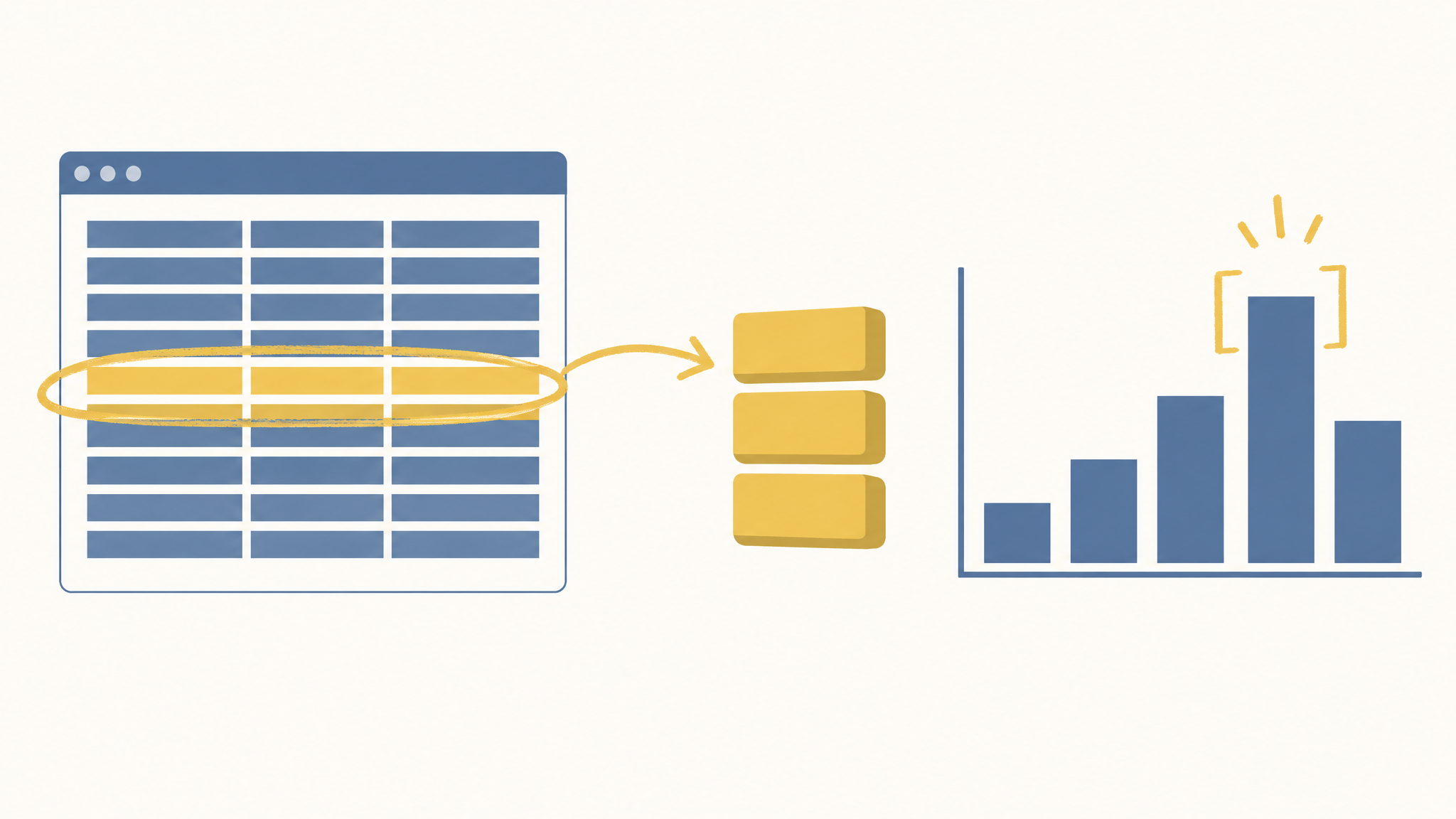
Three charges, one number
A 3.25% currency markup sits inside every overseas card transaction. An annual fee arrives once as a single S$196.20 row. A S$5 charge comes off each overseas ATM withdrawal. The bank knows what each one costs. A Google Sheets total that sums the rows it is handed does not, because two of the three arrive folded into an amount and the third arrives once a year, in a month that then looks like a bad month.
CalmExpense covers the part a CSV can cover: keyword rules tag fee rows so they stop sliding into a catch-all category, merchant cleanup keeps the descriptions readable, and the ledger stays in your own Google Drive. The markup inside the amount is the one piece no import can split out, which is the reason to know the rate.
The markup that never becomes a row
A foreign currency purchase on a Singapore-issued card carries a conversion fee of about 3.25%, split between the card network's 1% assessment and the issuing bank's 2.25% administrative charge (dbs.com.sg sets out the split). The fee is not posted as its own line. It is built into the Singapore dollar amount that appears on the statement, so a S$100 dinner in Tokyo shows up as S$103.25 and nothing in the row says why.
That design is why the fee survives every budgeting method. Cash accounting, envelope budgeting, a clean import into a spreadsheet all record S$103.25 as one expense and move on. Nothing is wrong with the total. It just cannot say that S$3.25 of it was a fee.
At S$1,200 of overseas card spend in a year, the markup costs S$39. At S$4,800, which is two trips with a hotel bill each, it costs S$156. The rates differ by market. The structure does not.
The bill that lands once and reads as a bad month
Mass-market cards in Singapore carry an annual fee of S$196.20 including GST, and the waiver rules have been tightening. DBS stopped waiving fees on spend thresholds for several cards from 1 August 2026, and UOB has moved waiver requests to self-service channels only (dbs.com.sg, uob.com.sg). Requesting a waiver on a miles card can also reverse the renewal bonus that came with paying the fee, so the S$196.20 sometimes buys something.
Set against a S$1,986 month, S$196.20 is 9.9% of the total. A month with no unusual spending reads 9.9% worse than the month before it, and the savings rate for that month drops from 50.4% to 45.4%. Spread across twelve months the fee is S$16.35, a different number with a different feel.
The S$5 that costs more than the cash
Overseas ATM withdrawals run S$5 flat on some cards and 3% of the amount with a S$5 minimum and a S$20 cap on others (ocbc.com). Six withdrawals across a year is S$30 before the ATM owner adds anything, and the machine's own operator fee is separate and usually invisible until the receipt prints.
Each charge is small enough to pass as rounding, and each is levied by an institution with no reason to make it obvious.
| Fee line | Where it shows up | Cost across a year | Effect on the total |
|---|---|---|---|
| Currency markup (3.25%) | Inside the converted amount, no row | S$39 on S$1,200 of overseas spend | Invisible, already counted |
| Annual fee | One row, once a year | S$196.20 | 9.9% of one month |
| Overseas ATM fee | One row per withdrawal | S$30 on six withdrawals | Reads as cash, not a fee |
| Total | S$265.20 | 1.1% of a S$23,832 year |
What S$265 does to a savings rate
Take S$4,000 take-home against S$1,986 of expenses. The savings rate is 50.4%. Add the fee lines and expenses come to S$2,251, which puts the savings rate at 43.7%. The gap is 6.7 percentage points, and it is the difference between a plan that looks on track and one that looks behind.
The arithmetic matters more than the amount. S$265 will not change anyone's year. A savings rate that is wrong by 6.7 points will change what someone decides to do next, because the number is the input to every other decision: how much buffer to hold, whether a raise was real, whether last month was a good month.
Why a summed total cannot separate them
A spreadsheet adds what it is given. Three things make fee lines hard to add correctly, and each one is a data problem rather than a discipline problem.
The first is the catch-all category. Fee rows land in whatever bucket the template calls Transfers or Uncategorised, and those are the rows people scroll past. Keyword rules in CalmExpense match on the description text, so a row reading ANNUAL FEE or FX CHARGE gets tagged as a fee on import instead of waiting for a manual edit.
The second is duplicates. A card payment that settles purchases already recorded in a card file counts twice, which is the S$1,240 problem in the settlement line that counts twice. Fee rows belong in the total, but only once.
The third is that some fees have no row at all. The 3.25% markup is inside the amount, so no CSV from any bank will ever show it as a line, and no Google Sheets formula can invent one. CalmExpense cannot split it out either. The only defence is knowing the rate and applying it to overseas spend when the number matters.
Honest limits: CalmExpense runs in the browser inside Google Sheets, there is no mobile app yet, imports are manual CSV files rather than a bank connection, and Google shows an unverified app warning while the user count is under 100.
When this is worth nothing
If the card is free for life, the spending never leaves Singapore, and cash comes from a local ATM, the three fee lines come to S$0 and the rest of this post does not apply. The same is true for anyone who already requests a waiver every year and checks the markup before a trip. The S$265 is a default. Actual fees depend on the card and the year.
What remains true either way is that a monthly total only answers what left the account. It does not answer what was a purchase and what was a charge for the privilege of making one. Subscriptions have the same shape: a S$219 a month bill that renews without a monthly line is easy to miss for the same reason, and recurring charges that never appear as a monthly row are the other half of the same problem. CalmExpense tags fee rows on import for exactly that reason.
FAQ
Is the 3.25% charged on the purchase or on the converted amount? On the converted amount, which is why the fee moves with the exchange rate. A weaker Singapore dollar makes the same purchase cost more and the fee slightly larger.
Can a spreadsheet show the markup if the bank posts it separately? Some issuers post a separate FX charge line, and those rows can be tagged like any other fee. When the fee is folded into the amount, nothing in the file separates it.
Is S$265 a year worth changing a card over? On its own, no. A free-for-life card removes the S$196.20 and nothing else, so the markup and the ATM charge stay. The number to compare is the one that survives the switch.
This content provides general financial education and product-use guidance, not individualized financial, investment, tax, or legal advice. CalmExpense is not affiliated with or endorsed by DBS, OCBC, UOB, or any financial institution. DBS, OCBC and UOB are trademarks of their respective owners.
See your own spending this clearly
CalmExpense turns your bank statement into a clean dashboard inside your own Google Sheets. No bank linking, no subscription. One payment of $29.90.
Start your free trial